
A beautifully designed home is not always filled with expensive furniture or extravagant décor pieces. Often, the spaces that feel the most inviting and luxurious are the ones that successfully combine natural elements with thoughtfully chosen accessories. Among all interior design trends, the combination of indoor plants and decorative accessories has become one of the most loved styling approaches for modern homes.
Indoor plants bring freshness, life, and a calming atmosphere into a room. Decorative accessories, on the other hand, add personality, texture, and visual interest. When these two elements are styled together, they can transform an ordinary corner into a warm, sophisticated, and professionally designed space.
The best part is that this styling technique works in every type of home. Whether you live in a spacious villa, a modern apartment, or a compact urban home, a carefully arranged planter, decorative vase, artistic sculpture, or handcrafted accessory can instantly elevate the atmosphere.
Professional interior designers frequently use greenery and decorative objects together because the combination creates balance. Plants soften hard surfaces and bring organic movement into a room, while accessories introduce colour, craftsmanship, and character.
If you have ever looked at beautifully designed Pinterest homes or luxury interior magazines and wondered why they feel so warm and complete, the answer often lies in this thoughtful layering of plants and accessories.
In this guide, we will explore practical and stylish ways to combine indoor plants and decorative accessories to create elegant, welcoming, and luxurious interiors.
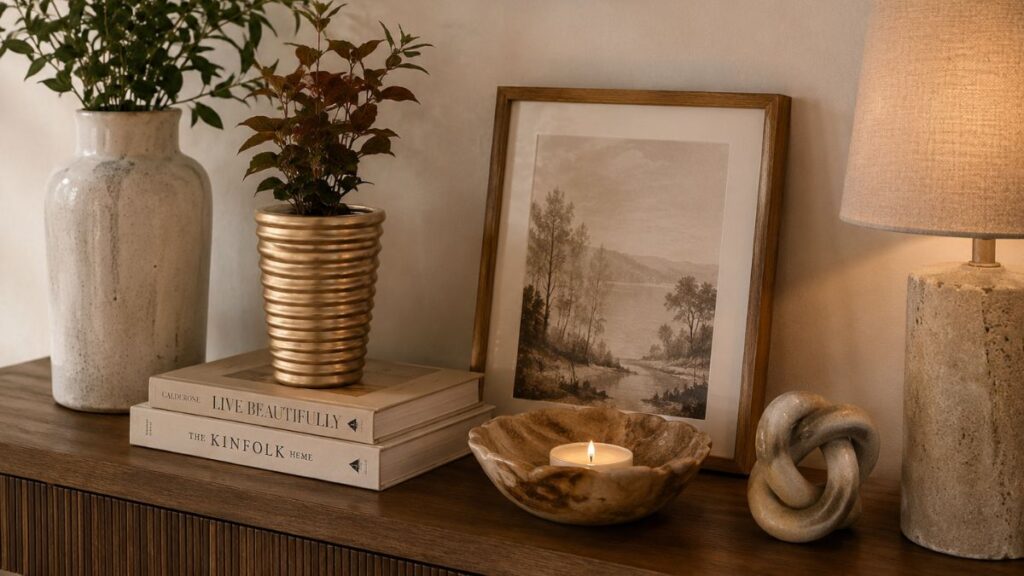
Why Indoor Plants and Decorative Accessories Work So Well Together
Interior design is all about creating harmony between different materials, shapes, and textures. Indoor plants and decorative accessories naturally complement each other because they offer contrasting yet balanced visual elements.
Plants introduce:
- Organic shapes
- Natural colours
- Softness and movement
- A sense of freshness
- Calm and relaxation
Decorative accessories contribute:
- Texture and craftsmanship
- Artistic details
- Colour accents
- Visual structure
- Personality and storytelling
Together, they create interiors that feel layered rather than flat.
Imagine a wooden console table with nothing on it. The space may look unfinished. Add a decorative sculpture, a handcrafted vase, and an indoor planter, and the entire setting immediately feels curated and intentional.
This layering technique is what gives luxury homes their polished appearance.
Benefits of Decorating with Indoor Plants
Creates a Welcoming Atmosphere
Greenery instantly makes a room feel alive. Even a single indoor planter can make a space appear more inviting and comfortable.
Luxury homes rarely feel cold because natural elements are often incorporated throughout the interior.
Softens Modern Interiors
Contemporary homes often feature:
- Straight lines
- Neutral palettes
- Minimal furniture
- Large surfaces
Plants introduce softness and break the rigidity of these designs.
A decorative planter beside a sofa or next to a console table can make a modern room feel warmer and more approachable.
Adds Colour Naturally
Many homeowners struggle to add colour without making their interiors feel overwhelming.
Plants solve this problem beautifully.
Greenery works with almost every colour palette:
- Beige interiors
- White interiors
- Wood tones
- Black accents
- Earthy aesthetics
Because plants are natural, they add colour without appearing forced.
Improves Mood and Comfort
Numerous studies suggest that spending time around greenery can contribute to a sense of calm and relaxation.
Although home décor is often associated with aesthetics, creating an environment that feels peaceful is equally important.
Indoor plants help make living spaces feel more comfortable and emotionally appealing.
Why Decorative Accessories Matter in Interior Styling
Decorative accessories are often the finishing touches that bring a room together.
Without accessories, even expensive interiors can feel incomplete.
Accessories help define a home’s personality.
Examples include:
- Decorative sculptures
- Artistic figurines
- Handcrafted accessories
- Decorative bowls
- Accent lighting
- Vases
- Wall décor
- Decorative trays
These pieces introduce visual layers that make interiors feel curated instead of empty.
Luxury interior designers frequently refer to accessories as the jewellery of a room.
Just as jewellery completes an outfit, decorative accessories complete an interior.
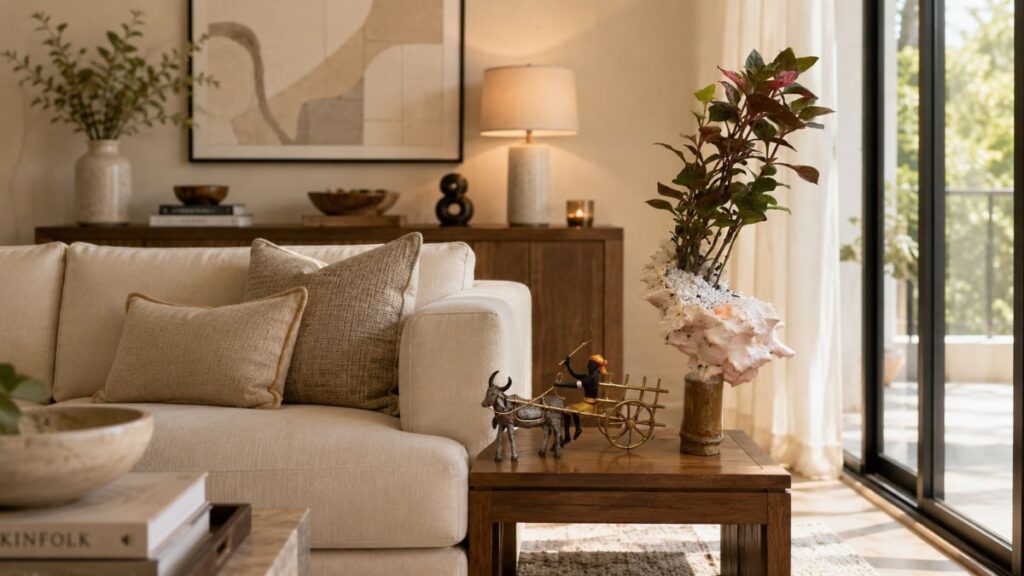
Choosing the Right Indoor Planters for Different Spaces
Not every planter works in every room. Selecting the right planter is just as important as choosing the plant itself.
Living Room
The living room usually benefits from:
- Medium-sized planters
- Decorative handcrafted planters
- Sculptural designs
- Natural materials
Planters placed beside sofas, near windows, or beside console tables work exceptionally well.
Entryway
Entryways create the first impression of a home.
A statement planter near the entrance immediately makes the space feel welcoming and elegant.
Pairing an indoor planter with decorative accessories on a console table can create a luxury hotel-inspired look.
Bedroom
Bedrooms require softer and more calming styling.
Consider:
- Small decorative planters
- Neutral colours
- Minimal accessories
- Warm lighting
Greenery in bedrooms contributes to a peaceful and relaxing environment.
Home Office
Home offices often benefit from indoor plants because greenery helps soften workspaces.
A decorative planter on a bookshelf or desk can make a workspace feel more comfortable and inspiring.
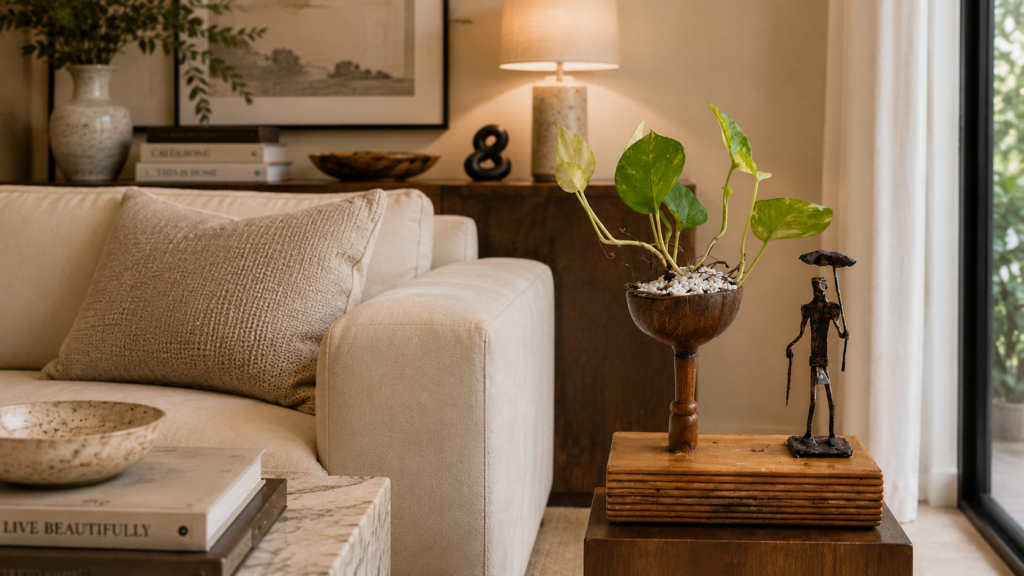
Styling Idea #1: Create a Sofa Side Table Arrangement
One of the easiest ways to combine indoor plants and decorative accessories is by styling a side table beside a sofa.
This approach is commonly seen in professionally designed homes.
A simple arrangement may include:
- Indoor planter
- Small stack of books
- Candle
- Ceramic vase
- Decorative sculpture
The key is balance.
Avoid overcrowding the table.
Instead, create varying heights and allow each object to have breathing room.
This arrangement instantly makes the living room feel sophisticated and thoughtfully designed.
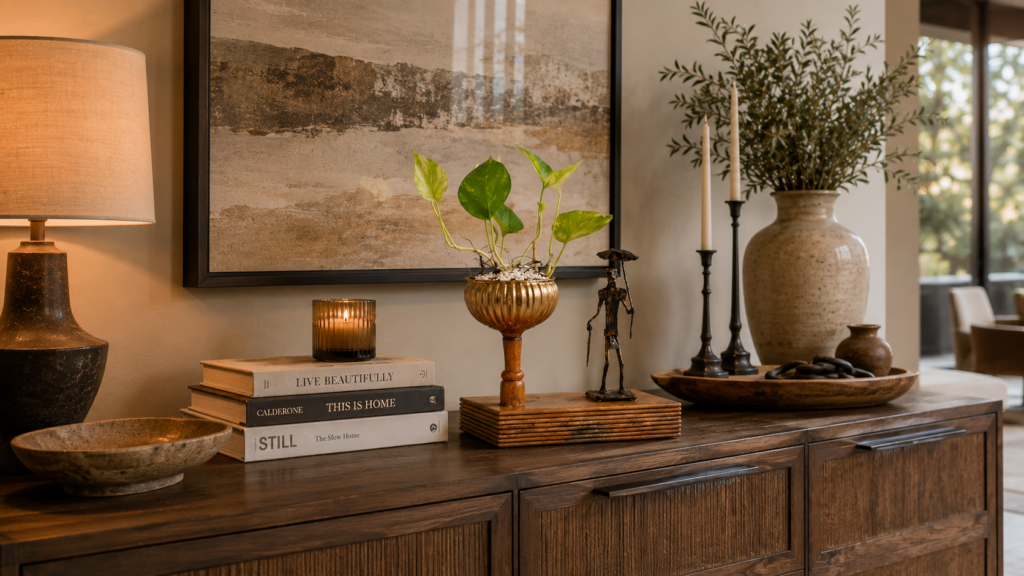
Styling Idea #2: Decorate a Console Table
Console tables offer one of the best opportunities for combining greenery and decorative objects.
A luxury console arrangement may include:
- Indoor planter
- Decorative accessories
- Framed artwork
- Accent lighting
- Books
- Decorative tray
Many interior designers use the “rule of thirds” while styling consoles.
For example:
Left side:
Tall planter
Centre:
Books and decorative sculpture
Right side:
Table lamp and accessory
This asymmetrical balance creates visual interest and prevents the arrangement from looking too formal.
Console styling is especially effective in:
- Entryways
- Living rooms
- Hallways
- Dining areas
Even a few carefully chosen accessories can dramatically improve the appearance of these spaces.
Styling Idea #3: Use Coffee Tables for Layered Décor
Coffee tables are often underutilised.
Most homeowners either leave them empty or overcrowd them with objects.
A better approach is to create a balanced arrangement that combines both greenery and decorative accessories.
A luxurious coffee table setup may include:
- Small indoor planter
- Decorative bowl
- Coffee table books
- Scented candle
- Artistic object
The combination of natural and decorative elements creates warmth while maintaining a clean and elegant aesthetic.
The arrangement should appear effortless rather than staged.
The goal is to make the room feel lived in and welcoming.
Styling Idea #4: Create a Cozy Reading Nook with Plants and Accessories
A reading nook is one of the easiest spaces to transform using indoor plants and decorative accessories.
You don’t need a large room to create one. Even a small corner beside a window can become a beautiful retreat.
A stylish reading nook can include:
- A comfortable accent chair
- A small side table
- An indoor planter
- Decorative books
- Warm accent lighting
- A handcrafted decorative object
- A soft throw blanket
The indoor planter introduces freshness and softness, while accessories add personality and warmth.
The goal is to make the corner feel inviting and relaxing.
Many luxury homes include intentionally designed corners that encourage slow living and comfort. A thoughtfully styled reading nook instantly makes a home feel more personal and sophisticated.
Styling Idea #5: Layer Decorative Accessories with Greenery
One common mistake homeowners make is placing accessories and plants separately.
Professional interior designers usually layer them together.
For example:
Instead of placing:
Planter → Empty Space → Sculpture
Try:
Planter + Sculpture + Books + Candle
Layering objects creates visual depth.
The arrangement feels richer and more luxurious because different materials interact with each other.
A successful layered arrangement may include:
- Wood
- Glass
- Metal
- Ceramic
- Greenery
- Soft lighting
This combination creates a designer-inspired aesthetic that feels warm and complete.
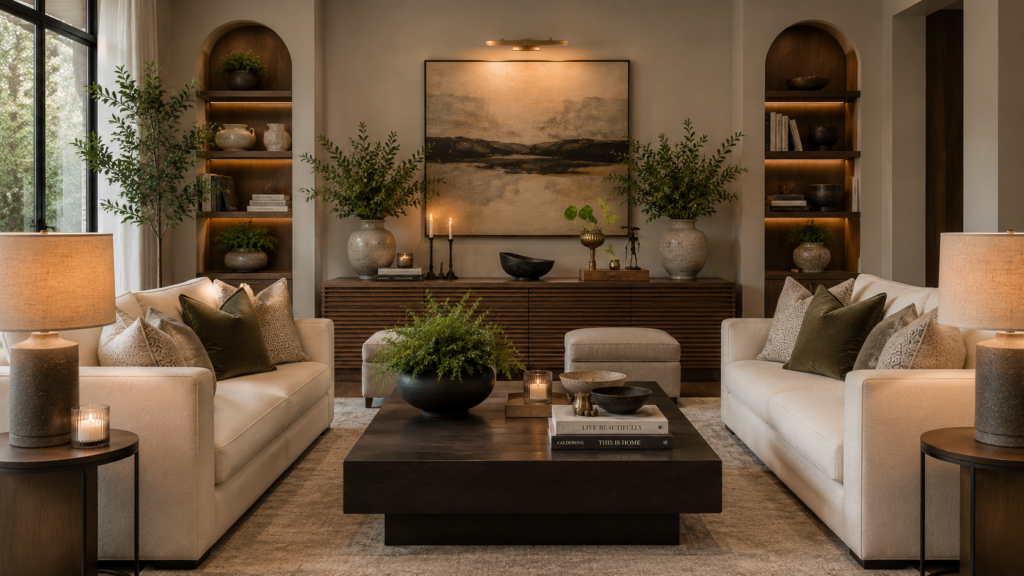
Styling Idea #6: Use Decorative Accessories to Highlight Indoor Plants
Indoor plants should not always stand alone.
Accessories can help make plants feel intentionally styled.
For example:
A planter can be paired with:
- Decorative figurines
- Artistic sculptures
- Handmade accessories
- Decorative trays
- Accent lighting
- Books
The accessories provide context and create a complete story around the plant.
This approach is commonly used in luxury hotels, designer homes, and editorial interior photography.
Even a simple planter can look extraordinary when combined with the right decorative elements.
The Importance of Texture in Interior Styling
Luxury interiors rarely rely only on colour.
Texture plays an equally important role.
When styling indoor plants and accessories together, combining different textures creates visual richness.
Examples include:
Smooth ceramic vase + leafy planter
Rustic wood accessory + glossy planter
Metal sculpture + natural greenery
Woven basket + decorative figurine
The contrast between textures prevents interiors from feeling flat.
This is one reason why handcrafted décor pieces are becoming increasingly popular.
Handmade products often possess unique textures and craftsmanship that add warmth and authenticity to modern homes.
Why Handcrafted Decorative Accessories Add Character
Mass-produced décor can sometimes feel impersonal.
Handcrafted accessories bring individuality into a home.
Every handmade piece tells a story through:
- Craftsmanship
- Materials
- Artistic details
- Cultural inspiration
- Imperfections that add uniqueness
When paired with indoor plants, handcrafted accessories create interiors that feel collected rather than purchased all at once.
This approach is one of the defining characteristics of luxury homes.
Instead of creating showroom-like spaces, designers focus on creating homes that feel personal and meaningful.
Decorative accessories with artisanal details can instantly make interiors appear more refined and memorable.
Common Mistakes to Avoid When Styling Plants and Accessories
1. Overcrowding Surfaces
Too many decorative objects create visual clutter.
Instead:
Choose fewer pieces and style them intentionally.
Negative space is just as important as decorative elements.
2. Using Oversized Accessories
Accessories should complement the room rather than dominate it.
Always maintain realistic proportions between:
- Furniture
- Planters
- Decorative accessories
- Lighting
Balance creates elegance.
3. Ignoring Height Variation
Objects of the same height can make arrangements appear flat.
Combine:
Tall planter
Medium vase
Small decorative object
This variation naturally guides the eye and creates visual interest.
4. Using Too Many Colours
Luxury interiors often rely on restrained colour palettes.
Try using:
- Beige
- White
- Brown
- Black
- Gold accents
- Greenery
This combination feels timeless and sophisticated.
5. Treating Plants as Afterthoughts
Plants should feel integrated into the room.
Avoid placing greenery randomly.
Instead, consider:
- Lighting
- Furniture placement
- Decorative accessories
- Visual balance
The plant should contribute to the overall design story.
Interior Designer Tips for Styling Plants and Decorative Accessories
Tip 1: Follow the Rule of Three
Groups of three often create pleasing compositions.
Example:
Planter + Vase + Sculpture
Book Stack + Candle + Plant
This arrangement naturally feels balanced.
Tip 2: Use Different Heights
Layering heights makes arrangements more dynamic.
Try combining:
Tall planter
Medium accessory
Small decorative object
This creates movement and sophistication.
Tip 3: Repeat Materials Throughout the Room
Consistency helps interiors feel cohesive.
If your planter includes wood tones, consider repeating wood through:
- Console tables
- Frames
- Decorative accessories
Repeating materials creates harmony.
Tip 4: Incorporate Warm Lighting
Lighting dramatically affects how decorative arrangements appear.
Warm lighting makes:
Plants appear richer.
Wood look warmer.
Metal accessories feel luxurious.
Textures become more pronounced.
A simple decorative arrangement can feel completely different under soft ambient lighting.
How Plants and Accessories Make a Home Feel Expensive
Luxury homes are not defined solely by expensive furniture.
They are defined by thoughtful styling.
Indoor plants and decorative accessories contribute to this feeling because they:
Create layers.
Introduce texture.
Add warmth.
Provide personality.
Break visual monotony.
Encourage comfort.
Professional designers often focus on these smaller details because they make interiors feel complete.
A beautifully styled planter beside a sofa, a handcrafted decorative object on a console table, or an artistic arrangement of books and greenery can elevate an entire room.
The result is an interior that feels elegant, welcoming, and timeless.
Frequently Asked Questions (FAQs)
1. How can indoor plants improve home décor?
Indoor plants add freshness, texture, and natural colour to interiors. They soften hard surfaces, improve visual balance, and make rooms feel warm and inviting.
2. Which indoor plants work best in luxury living rooms?
Popular options include:
- Areca Palm
- Snake Plant
- Rubber Plant
- Peace Lily
- Aglaonema
- ZZ Plant
These plants complement modern and luxury interiors while requiring relatively low maintenance.
3. How do decorative accessories make a home look expensive?
Decorative accessories create layers, add personality, introduce texture, and help interiors feel professionally styled. Handmade pieces, sculptures, books, and accent lighting can instantly elevate a room.
4. Can indoor plants and decorative accessories be styled together?
Yes. In fact, interior designers often combine greenery with decorative accessories because this creates depth, balance, and visual interest.
5. Where should I place indoor planters in my living room?
Indoor planters look beautiful:
- Beside sofas
- Near windows
- On console tables
- In empty corners
- Near bookshelves
- Adjacent to accent chairs
Strategic placement helps plants become part of the overall design story.
6. How do I avoid clutter when decorating with accessories?
Use fewer pieces and focus on balance. Follow the Rule of Three and leave some negative space between objects to create an elegant, luxurious appearance.
Final Thoughts
Decorating with indoor plants and decorative accessories is one of the most effective ways to create a home that feels warm, luxurious, and professionally designed.
Plants introduce life, freshness, and softness, while decorative accessories add personality, craftsmanship, and visual depth.
Together, they transform ordinary corners into meaningful and beautiful spaces.
You do not need a complete home renovation to achieve this look.
A carefully styled planter beside a sofa, a decorative accessory on a console table, or a layered arrangement of greenery and handcrafted décor can completely change how a room feels.
The secret lies in balance, thoughtful placement, and choosing pieces that complement one another.
By combining indoor plants with artistic decorative accessories, you can create interiors that are not only visually beautiful but also inviting, calming, and full of character.
At The Piece Store, we believe that thoughtfully selected décor pieces and handcrafted accessories have the power to turn everyday spaces into extraordinary homes. Whether you are styling a cosy apartment or designing your dream house, the right combination of greenery and decorative accents can help you create interiors that feel timeless, elegant, and uniquely yours.